
SMF 2026 Manila: A Regional Multistakeholder Dialogue on Polarization’s Impact on Democracy and Civic Space in Asia
Across Asia, deepening polarization is eroding social cohesion and shrinking civic space, making it increasingly difficult for people to engage in civic matters. Along ethnic, religious, and political lines, deepening divisions are creating opportunities for authoritarian actors to consolidate power and silence dissent.
For Vietnam Rise, addressing these challenges requires more than defending the civic space against the immediate threats. It means strengthening the relationships, capacities, and solidarity in the region. It also means creating spaces where stakeholders share each other’s perspectives and situations, and develop collective responses.
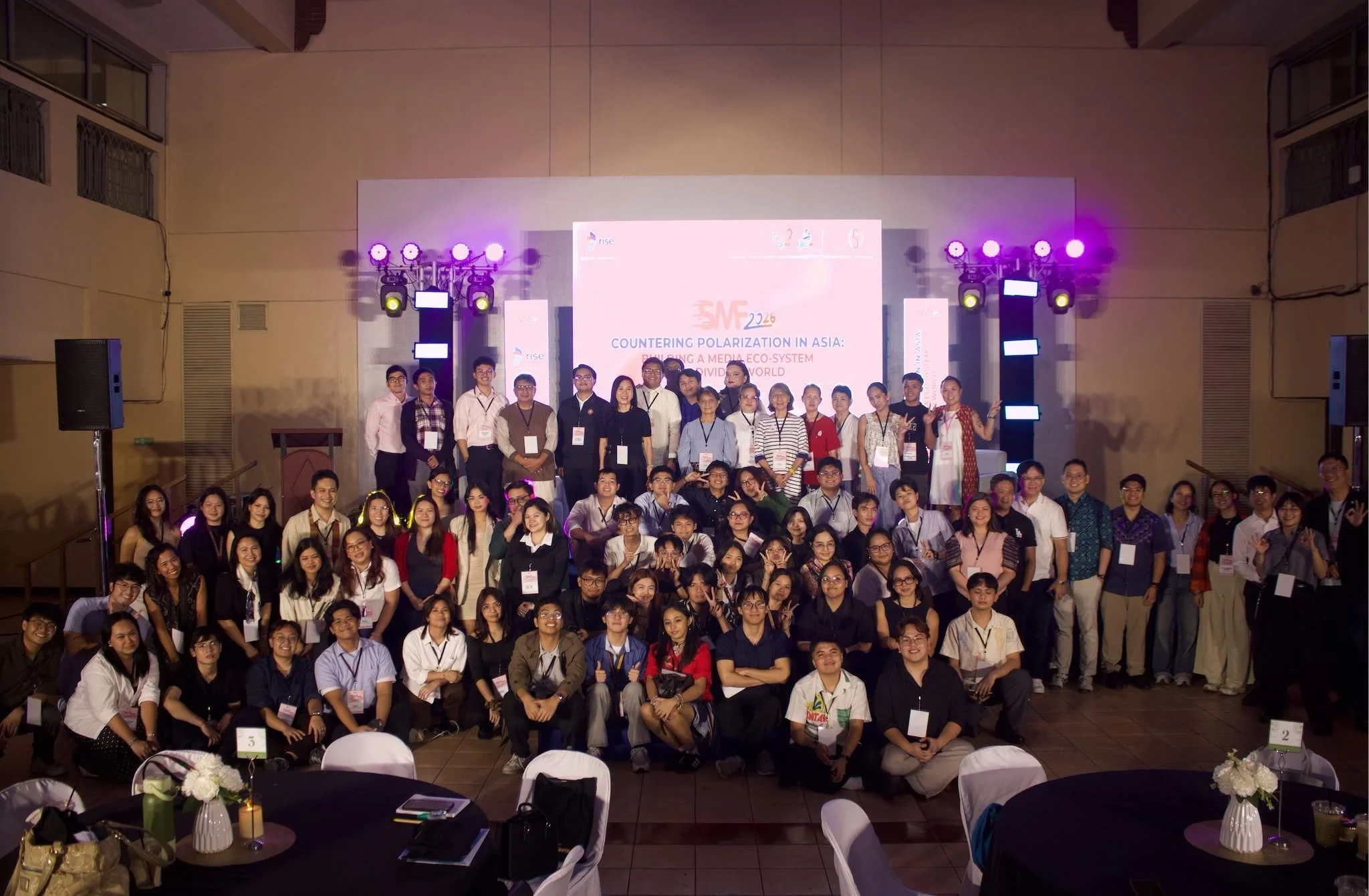
This vision shaped the 2026 Social Movement Festival (SMF), held on November 23 in Manila, Philippines, under the theme Countering Polarization: Building a Media-Eco System in a Divided World. Organized by Vietnam Rise in partnership with Center for Liberalism and Democracy, CALD Youth, Better Taiwan Together, and CSO Academy, with support from the Liberal Youth of the Philippines, SMF 2026 brought together 150 participants from the Philippines and speakers across Asia, including Taiwan, Indonesia, Malaysia, Thailand, Singapore, and virtually from Vietnam. The largest edition of Vietnam Rise's flagship event to date, it convened activists, academics, media practitioners, digital security experts, youth leaders, and democracy advocates for a full day of dialogue and knowledge-sharing.
Three key messages emerged from the discussions: civil society must move from reacting to polarization toward proactively addressing its underlying driver; strengthening grassroots solidarity across civil societies; connecting broader democratic values with people's everyday experiences.
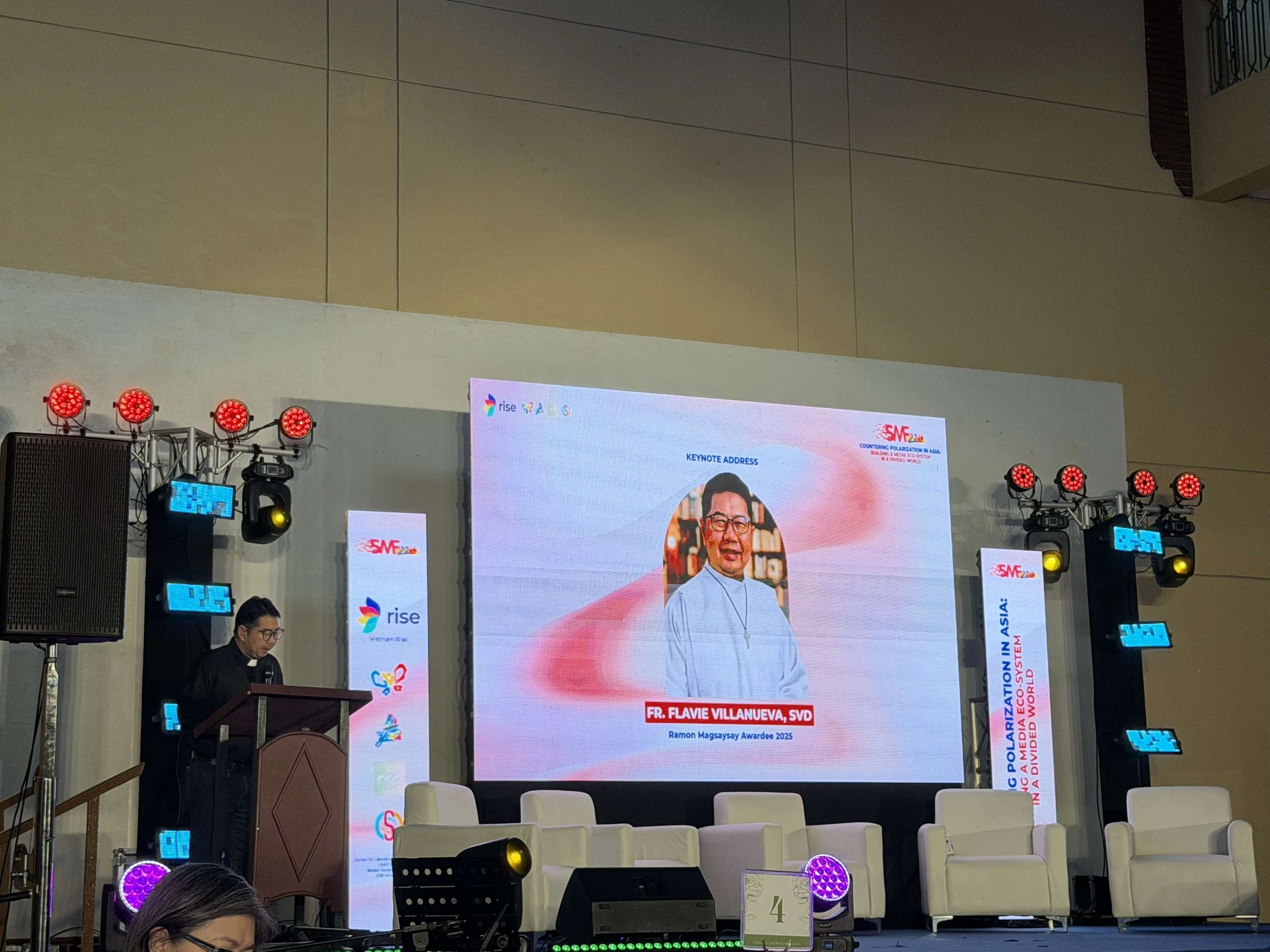
Keynote Address by 2025 Ramon Magsaysay Awardee
Setting the tone for the festival, keynote speaker Fr. Flavie Villanueva, 2025 Ramon Magsaysay Awardee, offered a powerful reminder that polarization is not an inevitable condition of society. If divisions are created by human actions, he argued, then the solutions needed to build a healthier social ecosystem can also be created by people.
His message provided an important starting point for the day's discussions: addressing polarization requires recognizing our collective agency and responsibility in shaping the societies we live in. He provided a vision for reimagining a healthy ecosystem in Asia.
Action instead of reaction
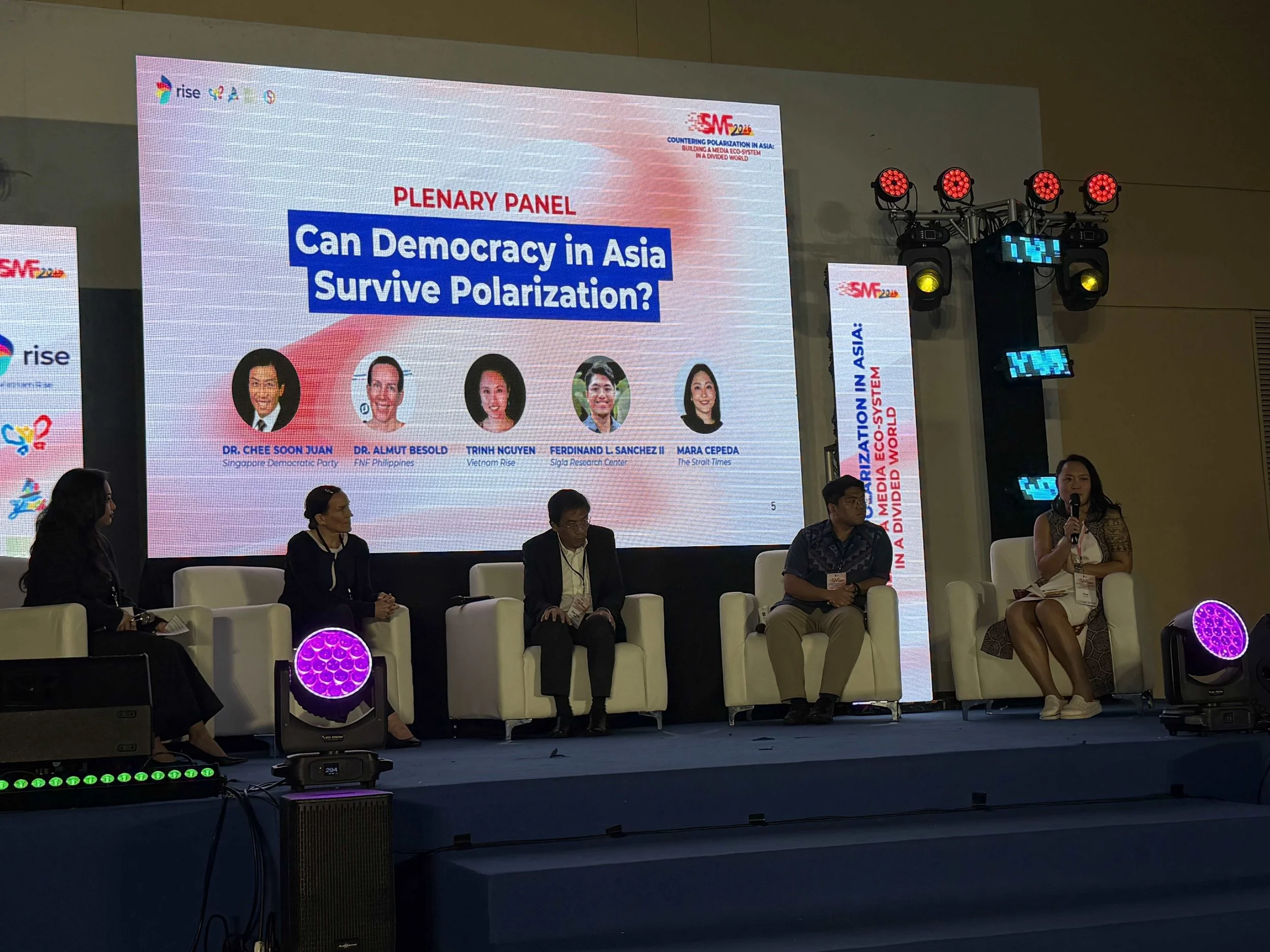
One recurring emphasis throughout the conference was the need for democracy advocates to take pre-emptive steps to immunise communities against divisive rhetoric. In the first plenary, Can Democracy in Asia Survive Polarisation, Dr Chee Soon Juan (Secretary-General of the Singapore Democratic Party) highlighted the danger of complacency that economically developed but politically restricted countries like Singapore faced. He explained that Singapore’s status as the wealthiest country in the world often masks the quiet suffering of citizens living paycheck to paycheck and unable to voice grievances about the government.
Complacency takes different forms depending on how closed or open the political environment is. The panel, Political and Electoral Polarisation and the Shrinking Civic Space in Asia, explored how open and partly open political systems can encourage inaction by punishing those with differing , Vietnam Rise’s executive director Angelina Huynh explained that the Vietnamese Communist Party’s censorship manufactures an appearance of consensus that supports the ruling party. Both cases involve top down and/or mob driven forces attempting to silence criticism to dismiss any demands for change or accountability.
On a pragmatic level, Vietnam Rise’s security expert Trinh Nguyen (Can Democracy in Asia Survive Polarisation) highlighted the need for developing digital defences to counter authoritarian censorship via social media and digital means of tracking and threatening dissenting voices. Digital reinforcement efforts include initiatives like Vietnam Rise’s helpdesk which supports grassroots actors working on Vietnam issues through services such as incident handling and digital security checks. How Media Shapes Polarisation in Asia panel explored ways users could prime their digital consumption to feed more nuanced information about topical issues. For example, Iqbal Fatkhi, Editor-in-Chief of Malaysian Cilisos Media mentioned that simply watching a video that promotes open dialogue in full before scrolling would signal to the algorithm to present more objective rather than biased commentary. Mindful choices on the individual level will reinforce opinions. Karel Galang, Senior Program Officer of the Asia Democracy Network stated that the marker of polarisation is not vicious disagreement between parties (which can help forge the best solution) but when this disagreement degrades into a belief that adversaries are ‘enemies’ who do not deserve a voice in the system at all. In closed political systems like Vietnam
Scaling up grassroots solidarity
Polarisation is often discussed in terms of high-level, warring factions (e.g., Democrats vs. Republicans, Israel vs. Palestine, etc) but workshops in SMF showed that tackling polarisation begins with day-to-day human interactions. The workshop Identity, Religion, and Ethnic Tensions in Asia explored the need to disrupt stereotypes which can fuel ethnic and religious tensions. Anna Hoang, Vietnamese Christian activist and Arizza Nocum, founder of Philippine KRIS For Peace discussed the importance of exchange between religious groups within familial and community settings in Vietnam and the Philippines respectively. Meanwhile, MJ, member of Malaysian political party GERAKAN and Kai Mata, Indonesian activist-musician discussed how comparatively poorer racial groups in Malaysia and sexual and gender minorities Indonesia were scapegoated for issues resultant from government failures. Asian Youth Voices in a Polarising World featured .
Asian Youth Voices in a Polarising World brought together young advocates working in political organising, feminism, freedom of expression, and grassroots mobilisation to explore how the next generation is responding to division and shaping the future of civic engagement. Tran Anh Quan, founder of the Vietnamese student organisation VOS enterprise, described how Vietnamese civil society and criticism of issues, such as Vingroup conglomerate’s construction projects, have been suppressed. In response, social media users who cannot leave comments on posts for fear of harassment, merely leave emoji responses which have become covert expressions of disapproval of government schemes. MindCare Club’s workshop Building Community Resilience Against Polarisation considered the daily practices activists could undertake to overcome the psychologically corrosive effects of polarisation.
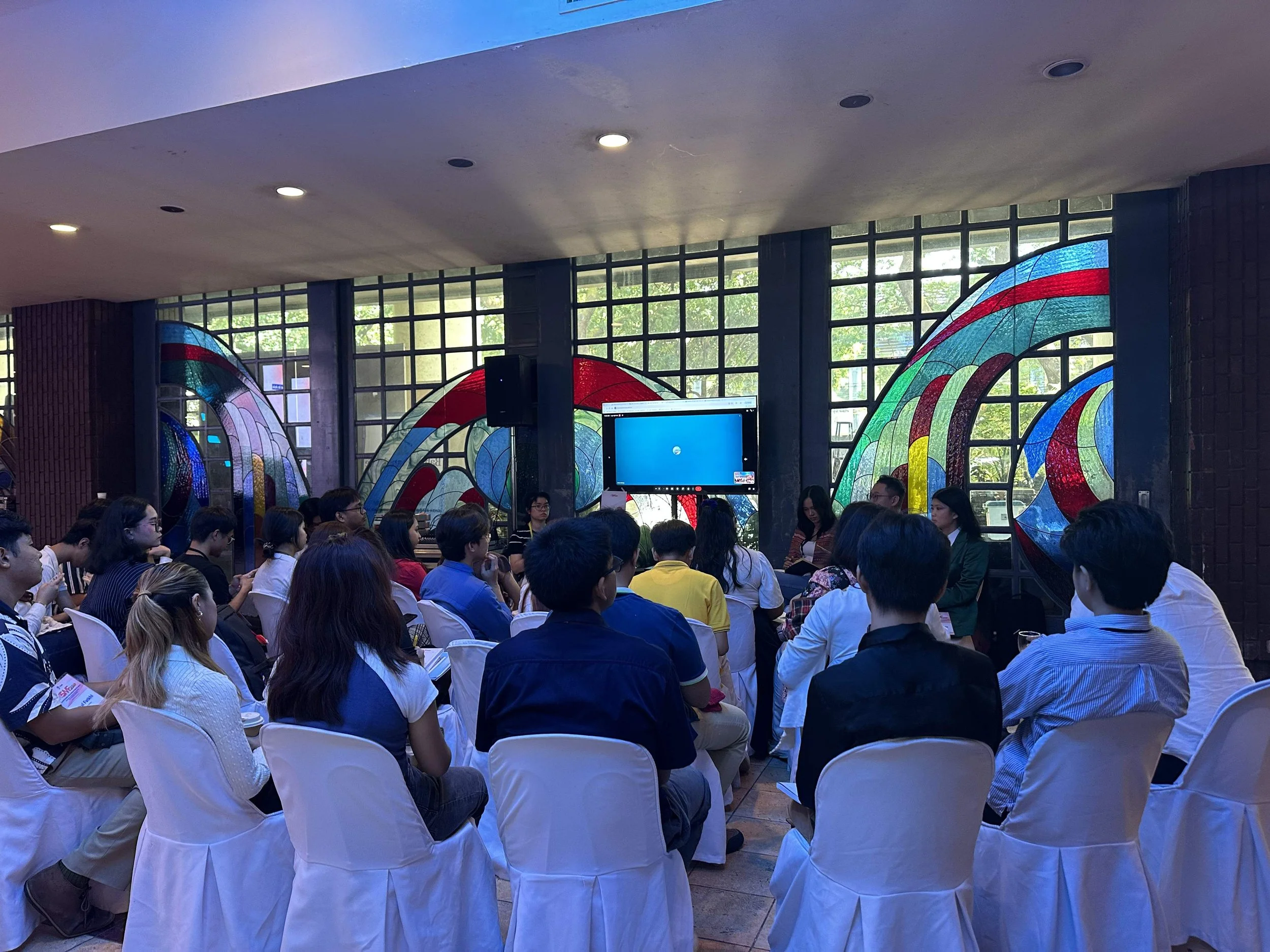
The growing participation and strong presence of experts at SMF 2026 underscore Southeast Asia’s increasing appetite for tactical exchange, knowledge-sharing, and collective learning amid an increasingly authoritarian and uncertain landscape. This year’s festival also saw particularly strong participation from youth organizations and student activists, highlighting the interest of young people in advancing dialogue as an effort to counter polarization and divisions.
SMF 2026